
When Presidents Kill

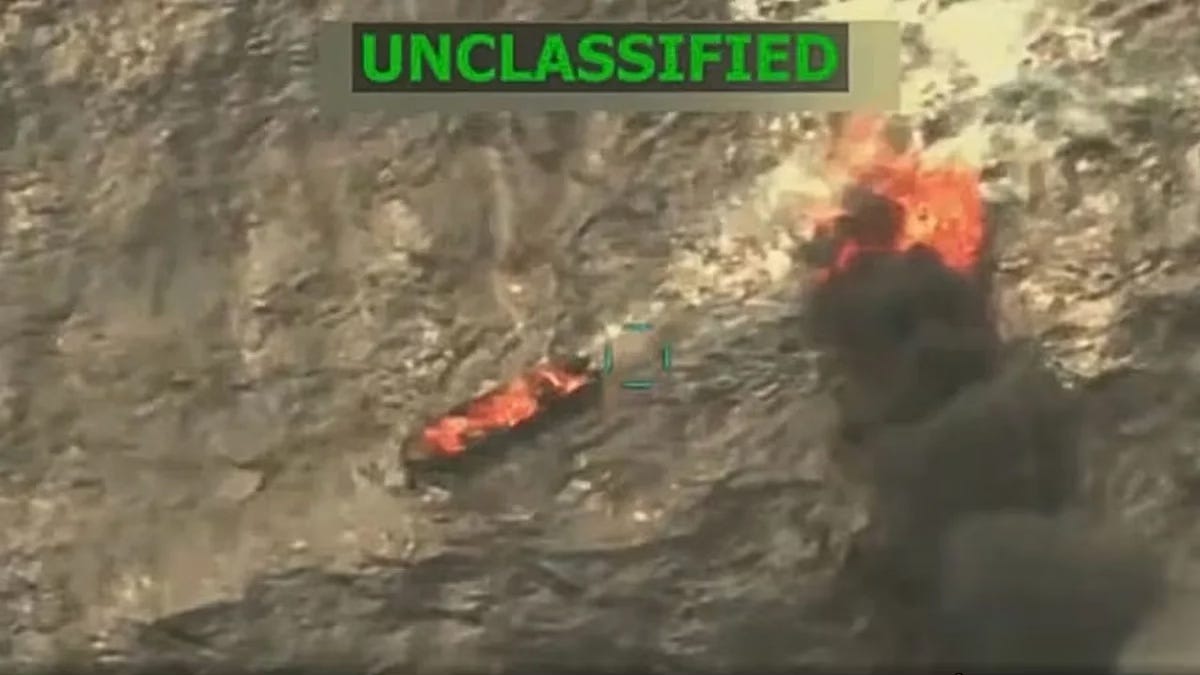
During the past six weeks, President Donald Trump has ordered U.S. troops to attack and destroy four speed boats in the Caribbean Sea, 1,500 miles from the United States. The president revealed that the attacks were conducted without warning, were intended not to stop but to kill all persons on the boats, and succeeded in their missions.
Trump has claimed that his victims are “narco-terrorists” who were planning to deliver illegal drugs to willing American buyers. He apparently believes that because these folks are presumably foreigners, they have no rights that he must honor and he may freely kill them. As far as we know, none of these nameless faceless persons was charged or convicted of any federal crime. We don’t know if any were Americans. But we do know that all were just extrajudicially executed.
Can the president legally do this? In a word: NO. Here is the backstory.
The Constitution was ratified to establish federal powers and to limit them. Congress is established to write the laws and to declare war. The president is established to enforce the laws that Congress has written and to be commander-in-chief of the armed forces. Restraints are imposed on both. Congress may only enact legislation in the 16 discrete areas of governance articulated in the Constitution — and it may only legislate subject to all persons’ natural rights identified and articulated in the Bill of Rights.
The president may only enforce the laws that Congress has written — he cannot craft his own. And he may employ the military only in defense of a real imminent military-style attack or to fight wars that Congress has declared. The Constitution prohibits the president from fighting undeclared wars, and federal law prohibits him from employing the military for law enforcement purposes.
The Fifth Amendment — in tandem with the 14th, which restrains the states — assures that no person’s life, liberty or property may be taken without due process of law. Because the drafters of the amendment used the word “person” instead of “citizen,” the courts have ruled consistently that this due process requirement is applicable to all human beings. Basically, wherever the government goes, it is subject to constitutional restraints.
Traditionally, due process means a trial. In the case of a civilian, it means a jury trial, with the full panoply of attendant protections required by the Constitution. In the case of enemy combatants, it means a fair neutral tribunal.
The tribunal requirement came about in an odd and terrifying way. In 1942, four Nazi troops arrived via submarine at Amagansett Beach, New York, and exchanged their uniforms for civilian garb. At nearly the same time, four other Nazi troops arrived via submarine at Ponte Vedra Beach, Florida, and also donned civilian clothing. All eight set about their assigned task of destroying American munitions factories. After one of them went to the FBI, all eight were arrested.
President Franklin Roosevelt panicked and ordered all eight summarily executed. When two of the eight protested in perfect English that they were born in the U.S., and their protests proved accurate, FDR decided to appoint counsel for all of them and to hold a trial.
At trial, all eight were convicted of attempted sabotage behind enemy lines — a war crime. The Supreme Court quickly returned to Washington from its summer vacation and unanimously upheld the convictions. By the time the court issued its formal opinion, six of the eight had been executed. The two Americans were sentenced to life in prison. Their sentences were commuted five years later by President Harry Truman.
The linchpin to all this was FDR’s decision to appoint counsel and have a trial. The Supreme Court made it clear that even unlawful enemy combatants — those out of uniform and not on a recognized battlefield — are entitled to due process; and, but for the trial afforded to the Nazi saboteurs, it would not have permitted their executions.
This jurisprudence was essentially followed in three Supreme Court cases involving foreign persons whom the George W. Bush administration had arrested and characterized as enemy combatants detained at the U.S. Naval Base in Guantanamo Bay, Cuba.
In wartime, U.S. troops can lawfully kill enemy troops that are engaged in violence against them. But, pursuant to these Supreme Court cases, the United Nations Charter — a treaty that the U.S. wrote — as well the International Covenant on Civil and Political Rights — another treaty that the U.S. wrote — if combatants are not engaged in violence, they may not be harmed, but only arrested. All this presumes that Congress has in fact declared war on the country or group from which the combatants come. That hasn’t happened since Dec. 8, 1941.
Now, back to Trump ordering the military to kill foreigners in the Caribbean. International law provides for stopping ships engaged in violence in international waters. It also provides for stopping and searching ships — with probable cause for the search — in U.S. territorial waters. But no law permits, and the prevailing judicial jurisprudence deriving from the Constitution and federal statutes absolutely prohibits, the summary murders of folks not engaged in violence — on the high seas or anywhere else.
The Attorney General has reluctantly revealed the existence of a legal memorandum purporting to justify Trump’s orders and the military’s killings — but she insisted the memorandum is classified. That is a non sequitur. A legal memorandum can only be based on public laws enacted by Congress and interpreted by the courts. There are no secret laws, and there can be no classified rationale for killing the legally innocent.
If the memorandum purports to permit the president to declare non-violent enemy combatants on a whim and kill them, it is in defiance of 80 years of consistent jurisprudence, and its drafters and executors have engaged in serious criminality. Where will these extrajudicial killings go next — to Chicago?
We are now in a Constitutional crisis. We have a POTUS performing extra-judicial murder at will, and attempting to do an end around regarding Posse Comitatus.
The Bill of Rights is clear regarding the 4th Amendment to the U.S. Constitution:
"The right of the people to be secure in their persons, houses, papers, and effects, against unreasonable searches and seizures, shall not be violated, and no Warrants shall issue, but upon probable cause, supported by Oath or affirmation, and particularly describing the place to be searched, and the persons or things to be seized."
There is most certainly an undocumented immigrants problem here in the US (although the impact of which I believe is a bit hyperbole and politicized by many). But the immigrant problem is now being used to expand the powers of ICE beyond the Constitutional powers given to POTUS or any other governmental entity. The Constitution is the highest law of the land. And if we Americans don't stand by our own Constitution, when it really matters, then we will become a country ruled by nothing more than lawless thugs and authoritarian dictators.
Yes! He is in my opinion, running amock. Now that may not be a legal term, but perhaps it is high time it was.
I am appalled at not only the real possibility of a Venezulan invasion but by what appears to be a BCG plan to use US troops to establish a Trump Med in Gaza. The plan is a highly illegial 21st century East India Company construct IMO.
Specifically:
"The model explored scenarios for the "voluntary" relocation of up to 500,000 Gazans, projecting relocation packages worth $9,000 per person—amounting to approximately $5 billion in total.
One detailed scenario proposed $5,000 in cash, subsidized rent for four years, and food for one year.
The model assumed that 25% of Gaza’s population would leave, with 75% of those not returning.
BCG estimated that relocating Palestinians would save $23,000 per person compared to providing support within Gaza during reconstruction.
Countries considered in the model as potential destinations for relocated Palestinians included Somalia, Somaliland, Egypt, Jordan, and the United Arab Emirates.
These options were reportedly based on media reports of discussions between Israeli and US officials and East African leaders, including potential incentives like recognition of Somaliland’s independence.
BCG projected $4.7 billion in economic benefits for host countries over the first four years of resettlement.
The financial modeling was linked to broader postwar visions for Gaza, including the so-called "Trump Riviera" and the GREAT Trust plan, which envisions US governance of Gaza for ten years and large-scale redevelopment.
BCG’s work formed the basis for financial projections used in these proposals, and staff from the Tony Blair Institute participated in related discussions, sharing a document titled “Gaza Economic Blueprint”.
BCG’s involvement sparked internal controversy, leading the firm to withdraw from the GHF project on May 25, 2025, forfeit its fees, and dismiss two partners responsible for the work.
The firm stated it did not design the relocation plan itself and publicly disavowed the modeling, claiming the partner in charge had been instructed not to pursue it.
The project, codenamed “Aurora,” involved over a dozen consultants and more than $4 million in contracted work over seven months."
Supposedly the plan has been shelved, do you believe that? I don't, not for a minute.